








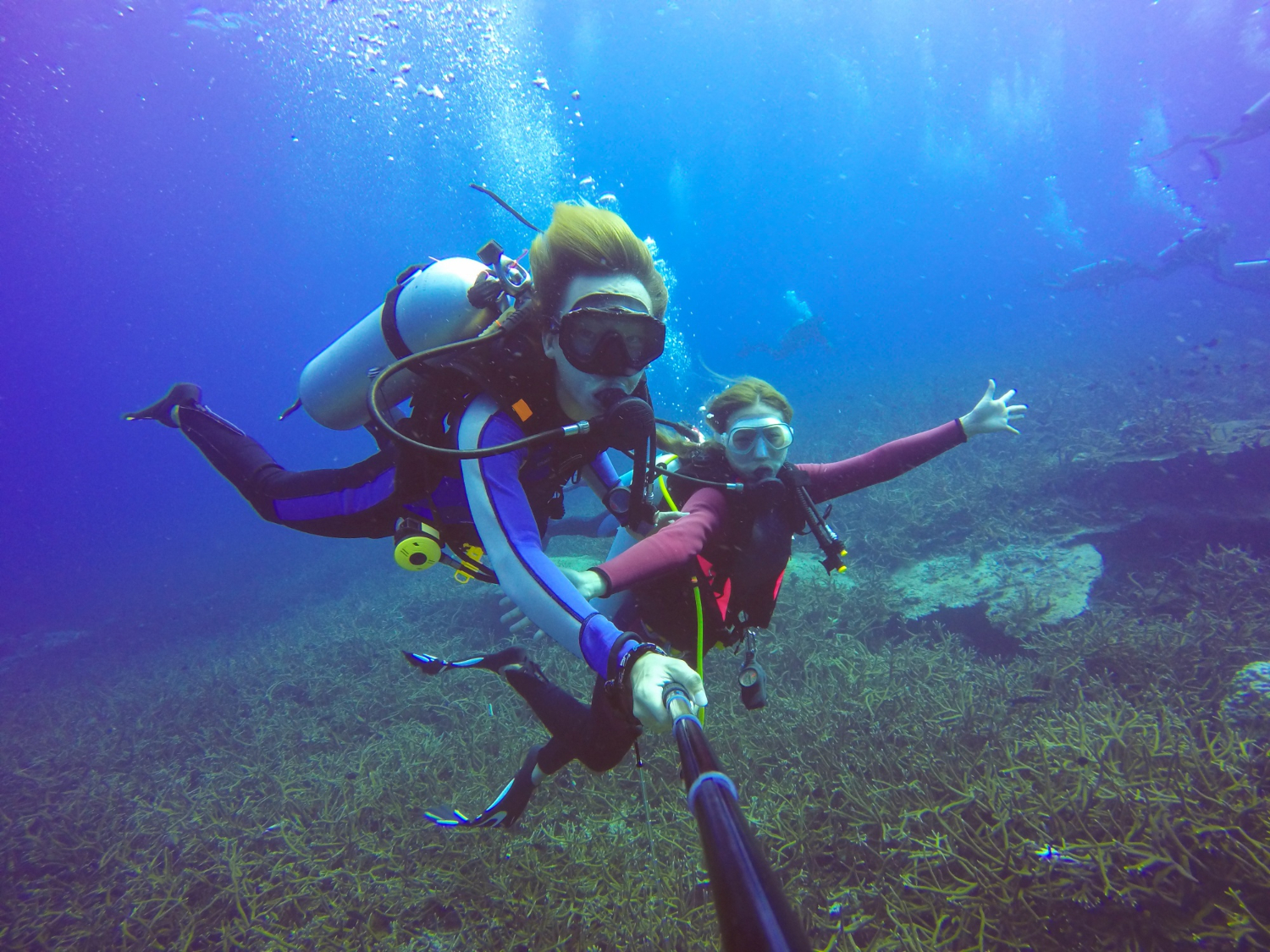
SSI or PADI? It’s a choice many people face when they start diving. Both organisations offer internationally recognised training programmes, so the course level, instructor’s competence, training conditions and time spent practising matter more than the logo on your certification. Choose a place where you can learn skills at your own pace rather than deciding based solely on an organisation’s popularity.
What’s the difference between SSI and PADI?
SSI, or Scuba Schools International, and PADI, or the Professional Association of Diving Instructors, develop diver training standards, learning materials and development pathways from beginner to professional level. Students learn the theory, practise in the water and demonstrate the skills required for each level.
Both organisations’ programmes teach similar basics: preparing equipment, buoyancy control, underwater communication, responding to common situations and dive planning. The main differences lie in how training is organised, the names of some certification levels, the learning materials and the rules that apply to instructors and dive centres.
| Area | SSI | PADI |
|---|---|---|
| Materials | Extensive digital tools and learning linked to a training centre | Standardised digital and printed materials |
| Recreational pathway | Entry-level courses, specialities and advanced levels | Entry-level courses, specialities and advanced levels |
| Certification | Recognised by dive centres worldwide | Recognised by dive centres worldwide |
| Professional development | Programmes for guides and instructors | Programmes for divemasters and instructors |
The names of equivalent certification levels are not always identical. However, starting your training with one organisation doesn’t mean you have to stay with it at every stage. A training centre can check your certification, dive history and skills, then recommend the right level for your next course.
Entry-level SSI and PADI courses
The first full recreational course usually leads to an Open Water Diver certification. Training covers theory, confined-water sessions and the dives required by the chosen organisation’s standards. Once you’ve completed it, you can dive with a buddy within the limits of your certification, age and local conditions.
The PADI Open Water Diver course and its SSI equivalent are designed to prepare you to perform basic underwater tasks independently. In both cases, practice is key: putting on and using equipment, controlled descents and ascents, maintaining neutral buoyancy, clearing your mask and responding appropriately to an out-of-gas situation.
If you’re not yet sure whether you want to gain a certification, start with a single dive under an instructor’s supervision. This basic diving course lets you get to know the equipment, learn the basics of breathing and experience being underwater without committing to a full training pathway straight away.
What really determines the quality of training?
The organisation sets the standards, but the instructor and dive centre are responsible for delivering the training. Before booking, ask how much time is set aside for practice, how large the group is, where the practical sessions take place and what happens if you need extra practice. A good instructor not only demonstrates an exercise but also explains its purpose and corrects mistakes without putting you under pressure.
Pay attention to the training conditions. Warm, clear water makes it easier to focus on technique, especially during your first sessions. Deepspot offers a 45.4 m-deep pool, water at 32 °C and underwater features such as caves and a wreck. Beginners don’t use the full depth straight away, but they can develop their skills at the same facility as they progress.
The opportunity to continue your training matters too. Deepsot offers courses including Scuba Diver, Indoor Diver, Open Water Diver, AOWD, Stress & Rescue and speciality courses. Once you’ve mastered the basics, you can improve your buoyancy, prepare to dive in a drysuit or learn to respond responsibly to problems affecting you or your buddy.
SSI or PADI in and around Warsaw?
If you’re interested in a PADI diving course in Warsaw, don’t compare centres based on location alone. Check where the practical sessions will take place, what equipment you’ll be given and whether the schedule allows time to consolidate your skills. Getting there matters, but it shouldn’t outweigh the quality of your interaction with the instructor.
PADI courses in Warsaw can differ in how they’re organised, group size and where the dives take place. Use the same criteria when choosing an SSI course. Compare the full scope of the training, not just the price or the number of days listed in the description. A shorter schedule isn’t always better if you need more time to equalise pressure, control your breathing or work on your buoyancy.
When choosing a school, also ask how the theory is taught and whether further practice sessions are available. Certification opens the door to more diving, but regular practice builds confidence underwater. A facility where you can dive all year round makes it easier to maintain your skills whatever the weather.
Instructor pathways with both organisations
If you’re considering a career in the diving industry, compare not only the first certification but the whole professional pathway. Before starting instructor training, you’ll need to gain experience, complete the preceding professional levels and meet the organisation’s current requirements.
The PADI instructor course and the SSI instructor pathway prepare you to teach in accordance with established standards, assess students’ skills and manage training. Check the specific prerequisites, documentation and certification procedures directly before enrolling, as they depend on the programme and the organisation’s current rules.
If you’re considering professional development with SSI, explore the SSI diving course leading to instructor level. Deepspot also runs a Scuba instructor course and a Dive Guide/Divemaster programme, so you can plan the next stages of your development at one training centre.
How do you make your final decision?
First, decide what you want to achieve. If you want to dive recreationally on your travels, both systems offer a clear pathway from the basics to more advanced activities. If you plan to work as a guide or instructor, compare the professional requirements, how you’ll work with dive centres and the availability of training where you intend to work.
Before signing up for a course:
- talk to the instructor and ask about their teaching approach,
- check what the theory covers and the number and type of practical sessions,
- make sure the training level matches your experience,
- ask about extra practice or a skills refresher,
- assess the facility, equipment and how sessions are organised,
- check which courses you can take after gaining your first certification.
For younger participants, age-related restrictions must be considered, and the depth, programme and supervision must be adapted to training standards. A diving course for children, designed for young beginners, may be a suitable first step.
Summary
Both SSI and PADI help you build a solid foundation and progress through further levels. When choosing a course, focus first on the instructor’s competence, the practice conditions and the amount of practical training. Good training should give you not only a certification but also the skills you need to dive confidently and responsibly.
FAQ
Is an SSI certification accepted at PADI centres?
Dive centres usually welcome divers certified by a range of recognised organisations. Before a dive, staff may check your certification level, experience, the date of your last dive and the conditions in which you previously trained. If you’ve had a longer break, they may recommend a refresher programme.
Do you need to buy your own equipment before the course?
At first, you’ll usually use equipment provided by the centre, but it’s worth confirming what’s included before booking. Your own mask can improve comfort if it fits well. It’s best to consider buying the rest of your equipment once you’ve gained some experience and understand your needs.
Can you start training with one organisation and continue with another?
Yes, you can switch between systems, although equivalent levels and requirements aren’t always identical. The training centre assesses your existing certification and experience and recommends the appropriate next course. At professional level, additional procedures or crossover training may be required.